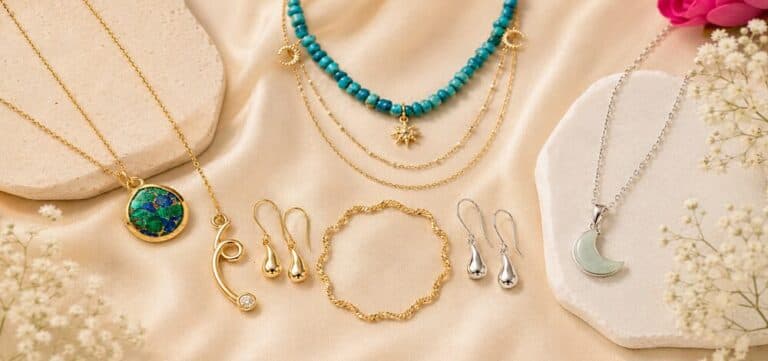
Jewellery & Accessories
The right jewellery can transform an outfit or mark a special moment. Here, you will find pieces designed to last, made with materials like recycled silver, responsibly sourced gold, and conflict-free stones. We focus on independent UK brands that prioritise transparency in their supply chains and ensure fair working conditions. Each item is chosen for its quality and enduring style, so you can wear it with confidence for years to come.
2 productsfrom £28
2 products · sorted by most popular


How to Choose Jewellery That Lasts
When selecting jewellery, consider both the material and the craftsmanship. For everyday wear, look for durable metals such as sterling silver, gold vermeil, or solid gold. Sterling silver is a popular choice for its versatility and affordability, though it requires occasional polishing to maintain its shine. Gold vermeil offers the look of gold at a more accessible price point, but it's important to understand it is a thick layer of gold over sterling silver, not a solid gold piece. Solid gold, whether 9ct, 14ct, or 18ct, provides the most longevity and resistance to tarnishing. For gemstones, assess their hardness and how they are set. Stones like diamonds, sapphires, and rubies are highly durable, making them suitable for rings and pieces worn frequently. Ensure settings are secure, with prongs or bezels holding stones firmly in place, to prevent loss. Beyond materials, consider the brand's commitment to ethical sourcing. Many independent UK jewellers are transparent about where their metals and stones come from, often using recycled materials or working with certified suppliers to ensure responsible practices. This attention to detail in both design and origin means you are investing in a piece that not only looks good but also aligns with your values.
Understanding Ethical Sourcing in Jewellery
Ethical sourcing in jewellery means ensuring that the materials, from metals to gemstones, are obtained in a way that respects both people and the planet. For metals, this often translates to using recycled silver and gold, which reduces the demand for new mining and its associated environmental impact. Some brands also work with Fairmined or Fairtrade certified gold, guaranteeing that miners receive fair wages and work in safe conditions, and that environmental standards are met. When it comes to gemstones, the focus is on traceability and ensuring they are conflict-free. This means verifying that stones have not funded armed conflict or been extracted using exploitative labour practices. The Kimberley Process Certification Scheme is one measure for diamonds, though many brands go further, working directly with small-scale miners or using lab-grown alternatives that offer a guaranteed origin. Understanding these distinctions allows you to make informed choices, supporting brands that are actively working to improve the jewellery industry's social and environmental footprint. It is about choosing pieces that carry a story of integrity, not just beauty.
Common questions
What is the difference between gold vermeil and gold plated jewellery?
Gold vermeil is a specific type of gold plating where a thick layer of gold (at least 2.5 microns) is applied over sterling silver. Gold plated jewellery, by contrast, can use any base metal and typically has a much thinner layer of gold. Vermeil is generally more durable and less likely to tarnish quickly than standard gold plating, making it a higher quality option for those seeking the look of gold without the solid gold price tag.
How can I ensure my jewellery is ethically sourced?
To ensure your jewellery is ethically sourced, look for brands that are transparent about their supply chain. Many will specify if they use recycled metals, Fairmined or Fairtrade certified gold, or conflict-free gemstones. Some brands work with lab-grown diamonds or gemstones, which offer a guaranteed ethical origin. If a brand openly shares details about their material sourcing and production practices, it is a good indicator of their commitment to ethical standards.
What are the best materials for sensitive skin in jewellery?
For sensitive skin, hypoallergenic metals are the best choice. Sterling silver, pure gold (14ct or 18ct), and surgical stainless steel are generally well-tolerated. Avoid jewellery containing nickel, as this is a common allergen that can cause irritation. If you have very sensitive skin, opt for solid gold over gold vermeil or plated options, as the base metal in plated pieces can sometimes cause a reaction if the gold layer wears thin.
How do I care for my jewellery to make it last longer?
Proper care can significantly extend the life of your jewellery. Store pieces separately to prevent scratching, ideally in a soft pouch or lined box. Avoid exposing jewellery to harsh chemicals, perfumes, lotions, and excessive moisture, which can tarnish metals and damage gemstones. Clean regularly with a soft cloth and, for most pieces, a mild soap and water solution, then dry thoroughly. For specific materials like pearls or opals, consult the manufacturer's care instructions.
Why should I choose jewellery from independent UK brands?
Choosing jewellery from independent UK brands often means supporting artisans who prioritise craftsmanship, unique design, and ethical practices. These brands typically have more direct control over their supply chains, allowing for greater transparency regarding material sourcing and production methods. You are more likely to find pieces made with recycled metals, responsibly sourced gemstones, and a commitment to fair labour, all while investing in distinctive designs that stand out from mass-produced items.
From the Journal